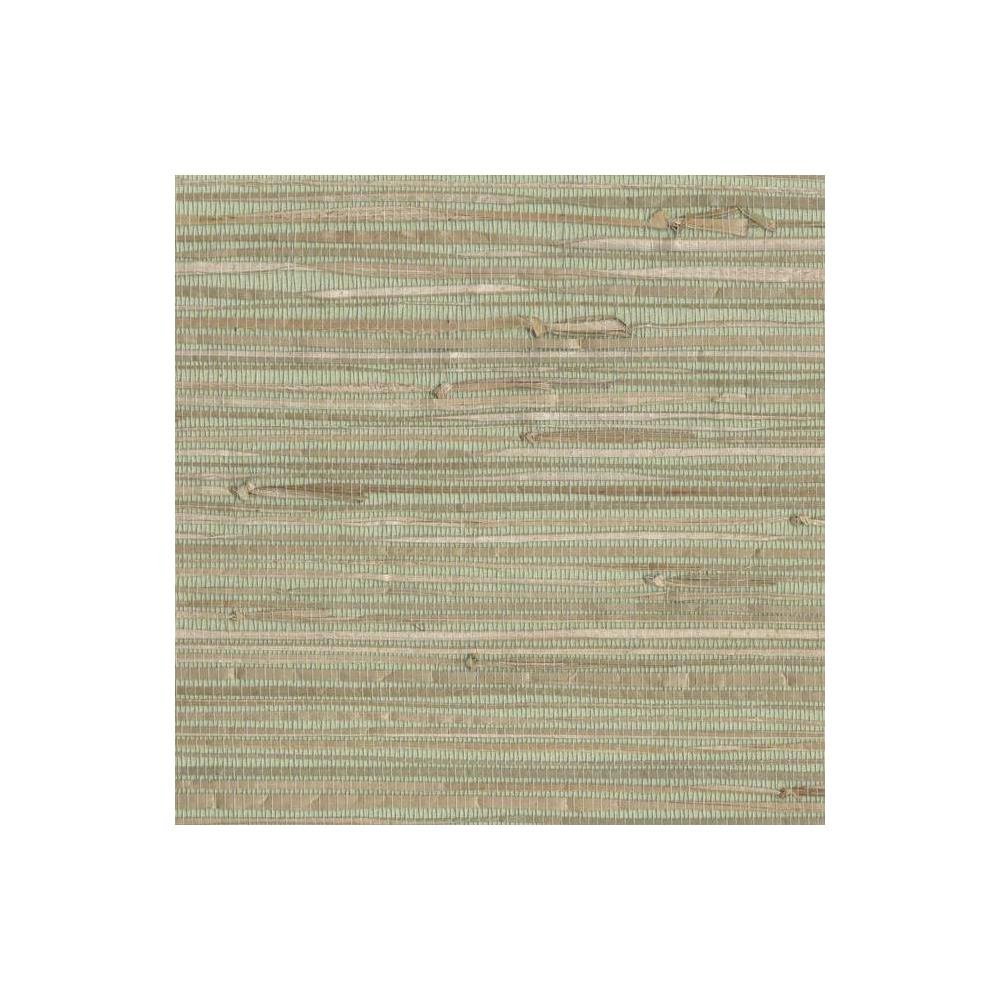
You just found a grasscloth-wrapped dining room on Instagram and something clicked — the walls weren’t just textured, they felt alive, like the woven surface was doing as much narrative work as the botanical print layered over it. But now you’re wondering: is that a real design strategy, or just a lucky accident that photographs well?
It’s absolutely a strategy, and it’s more nuanced than it looks. Grasscloth is a natural-fiber wallcovering — typically made from woven grasses like seagrass, jute, or sisal, bonded to a paper backing — and it belongs to a broader category called textured wallcoverings, which also includes linen-weave, hemp, raffia, and embossed papers. A scenic wallpaper (also called a mural wallcovering) is a large-format image — a landscape, a botanical panorama, a chinoiserie forest — designed to read as one continuous composition across multiple panels. The question this article answers: when does putting those two things together produce something better than either alone, and when does texture actively undermine the scenic image you paid for?
Why Texture Changes the Way a Scenic Image Reads
Here’s the core mechanic you need to internalize before speccing anything: a textured substrate introduces light-scatter, meaning the surface breaks up ambient and directional light rather than reflecting it evenly. On a flat, coated paper, a photographic-quality mural delivers the image exactly as the studio rendered it — crisp, saturated, edge-sharp. On a woven grasscloth, that same image goes through a soft-focus filter. Some design moves are improved by that filter. Others are destroyed by it.
Per Wallpaper*‘s 2025 feature on texture-as-narrative, the designers finding the most success with this approach are deliberately choosing painterly or ink-wash scenic styles — loose Chinese watercolor landscapes, lightly rendered botanical prints, abstract terrain — rather than photographic or hyper-detailed murals. The logic is straightforward: if the image was already meant to feel handmade and slightly impressionistic, a woven surface reinforces that character. The texture and the image are telling the same story.
The tradeoff is precision. Architectural Digest’s 2024 wallcovering guide notes that fine-line details — architectural ruins with crisp stonework, sharply rendered botanical illustrations in the Audubon tradition, photorealistic forest photography — lose legibility on textured substrates. The fiber weave physically interrupts the ink or dye, and from normal viewing distance, the image can look muddy or unresolved. If your scenic was chosen for its detailed draughtsmanship, you want flat paper.
The decision frame:
- Painterly, wash-style, or loosely rendered scenic → texture often enhances
- Photographic, fine-line illustrated, or architecturally precise scenic → texture often degrades
The Substrate Variable: Not All Texture Is Equal
Practitioners sometimes make the mistake of treating “textured wallcovering” as a single category. It isn’t. The degree of texture relief — how much the surface physically rises and falls — varies enormously, and that variance determines whether a scenic image printed on or installed adjacent to that substrate will read cleanly.
Here’s a quick reference for the substrate spectrum:
| Substrate Type | Surface Relief | Effect on Scenic Imagery |
|---|---|---|
| Flat-coated paper / non-woven | Negligible | Maximum image fidelity |
| Linen-weave or fine grasscloth | Low-medium | Soft impressionistic quality; works with wash styles |
| Standard grasscloth (seagrass/jute) | Medium | Pronounced grain; best for loose painterly images |
| Raffia or coarse sisal | High | Strong texture dominates; scenic becomes secondary |
| Embossed paper (faux grasscloth) | Variable | Manufactured consistency; more predictable than natural fiber |
The Spruce’s 2024 grasscloth overview points out something that frequently trips up first-time buyers: natural grasscloth has inherent color variation between rolls. Unlike manufactured wallpaper, the fiber is a crop, and dye lots shift. When a scenic print is applied directly to grasscloth (as some vendors now offer as a specialty product), those dye-lot variations interact with the ink layer in ways that are nearly impossible to predict without seeing a physical sample at scale. The site’s standard “order 4–6 samples” recommendation is non-negotiable here — for a grasscloth-backed scenic, order samples from the specific production run if the vendor will accommodate it, not just the colorway.
Embossed papers (sometimes marketed as “faux grasscloth”) offer a middle-path worth naming: they have manufactured surface texture — regular enough that scenic imagery prints on them with much more consistency than natural fiber — while still delivering some of the organic warmth buyers are after. For hospitality projects where exact color matching across 40-plus panels is a hard requirement, embossed non-woven is often the more defensible spec than authentic grasscloth.
When to Use Texture as a Layering Strategy (vs. as the Scenic Substrate Itself)
There are actually two distinct use cases here, and conflating them leads to expensive specification errors:
Use Case A: Textured wallcovering printed with scenic imagery. The scenic image is printed directly onto the grasscloth or textured substrate at the factory. The texture and the image are unified in one product. This is a specialty offering — brands like Phillip Jeffries have explored textured-substrate printed collections, and custom vendors can sometimes accommodate it at significant minimum-order thresholds. The risk is that registration (how precisely the image aligns at panel seams) is harder to control on natural fiber than on flat paper. Veranda’s 2025 naturalism feature cited installer feedback noting that seam management on printed grasscloth can add 15–20% to labor time versus standard scenic installation.
Use Case B: Textured wallcovering as the room’s base layer, with a flat scenic panel as a feature wall within that space. This is the far more common and controllable approach. You’re designing a room where three or four walls are grasscloth (solid or lightly textural) and one wall — typically the primary focal point, perhaps behind a headboard or a fireplace — is a flat scenic mural panel. The texture surrounds the scenic and creates a material contrast that actually elevates the mural. House Beautiful’s 2024 piece on woven wall coverings describes this as the “frame within the frame” technique: the grasscloth acts as a room-scale mat board, and the scenic becomes a painting.
The math for this approach works in your favor at the mid-to-premium tier:
By the numbers: Grasscloth for three walls of a 14×12 ft room: ~$800–$2,400 material cost depending on spec Single feature-wall scenic panel (e.g., Fromental custom, one wall): $2,000–$6,000+ NGPP-certified installer time for hybrid room: typically 1.5–2× a single-material installation Combined true cost: $5,000–$12,000+ before shipping, liner, and paste — budget accordingly
Apartment Therapy’s grasscloth explainer flags a frequently missed cost item: liner (a blank preparatory wallcovering applied before the main material) is often required under grasscloth to prevent telegraph from wall imperfections, and it adds $0.75–$1.50 per square foot to the job before you’ve bought a single roll of your actual material.
The Installer Conversation You Need to Have Before You Spec This
If you’re working with grasscloth and scenic panels in the same room, this is not a general-contractor job. The seam behavior of natural-fiber grasscloth is categorically different from paper-backed wallpaper: the fibers can unravel at cut edges if handled incorrectly, the material doesn’t tolerate excess moisture from paste, and the seams are typically butt-jointed rather than overlapped, requiring a level of precision that rewards experience. For the scenic panel wall, you’re adding a second set of registration and trimming requirements.
The NGPP (National Guild of Professional Paperhangers) certification is the baseline qualification to request from any installer you hire for this scope. It’s not a guarantee of grasscloth-specific expertise, but it establishes that the installer has formal training in wallcovering materials and installation standards — and more importantly, it gives you a professional vocabulary to have the capability conversation. Ask directly: how many grasscloth installations have you completed in the past 24 months, and have you installed scenic panels in the same room? If the installer can’t name specific projects or reference clients you can contact, keep looking.
Decision Rules: If X, Then Y
You’ve absorbed the tradeoffs. Here’s how to close the loop on a pending spec decision:
If your scenic is a loose watercolor or ink-wash landscape → textured substrate is likely your friend. Order a large-format sample of the specific grasscloth and position it behind a printed swatch of the scenic to assess how the fiber grain reads at viewing distance.
If your scenic is a fine-line botanical illustration or photographic mural → keep the scenic on flat paper and use grasscloth on surrounding walls as contrast. Don’t compromise the image.
If you’re speccing a hospitality project that needs consistent color match across a high panel count → embossed non-woven over natural grasscloth for the textured walls; it’s a defensible spec your client can sign off on and your installer can price reliably.
If the room has variable natural light (a common condition in dining rooms and hotel corridors) → commission a physical mockup panel before full production. Light-scatter from grasscloth behaves differently at different times of day, and a scenic printed on textured substrate can look dramatically different at noon versus candlelight.
If budget is constrained → do the math on Use Case B before committing to custom printed grasscloth. Three walls of mid-range grasscloth plus one wall of a standard scenic from a vendor like Fromental or Timorous Beasties may deliver more impact for less money than a fully custom printed-grasscloth product — and it’s a more controllable installation.
The through-line in every case is the same: get samples, bring your installer into the conversation before you finalize the spec, and surface the true cost — liner, labor premium, and shipping — before you present a number to a client. Texture is one of the most powerful tools in a scenic wallcovering project, but it rewards forethought in exact proportion to how much you spend.
Ready to model the panel count and true cost for a grasscloth-plus-scenic room? Use our room-scale wallpaper calculator to run the numbers before you go to sample.